

Choosing an activity for a young athlete can feel like a long list of trade-offs — cost, timing, whether they'll actually enjoy it, whether it will hold their attention for more than a fortnight. Basketball solves more of that list than most people expect. It's fast enough to be genuinely fun, structured enough to teach real skills, and social enough that it builds friendships alongside fitness.
Choosing an activity for a young athlete can feel like a long list of trade-offs — cost, timing, whether they'll actually enjoy it, whether it will hold their attention for more than a fortnight. Basketball solves more of that list than most people expect. It's fast enough to be genuinely fun, structured enough to teach real skills, and social enough that it builds friendships alongside fitness.
At Y NSW's Junior Basketball Academy (JBA), we work with children aged 5 to 14 through three connected programs: in-school PE workshops, weekend skills classes, and school holiday Skills Camps. Across all three, we see the same five benefits show up again and again — for children who have never picked up a basketball before, and for those who play every week.
Here's what the research and our coaches consistently point to, and how each benefit actually looks on the court.
1. Physical Fitness and Motor Skill Development
Basketball is what exercise physiologists call a 'fundamental movement skills' sport — running, jumping, throwing, catching and changing direction are all built in, without a young player ever feeling like they're doing a fitness class. A single session works on cardiovascular fitness, balance, coordination and reaction speed all at once.
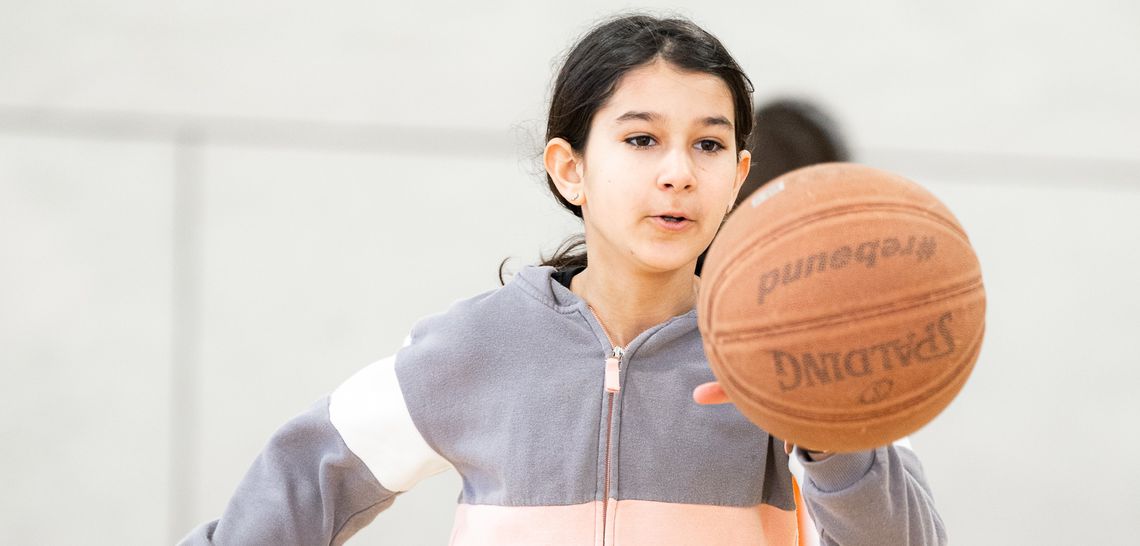
For primary-school-aged children specifically, this matters because the years between five and twelve are when fundamental movement patterns are still forming. Skills like dribbling — controlling a bouncing ball while watching the court, not the ball — build hand-eye coordination and spatial awareness that transfer well beyond basketball, into other sports and everyday physical confidence.
2. Confidence and Self-Esteem
There's a particular kind of confidence that comes from mastering something in front of your peers — landing a shot, completing a drill cleanly, being picked for a team during a scrimmage. Basketball offers frequent, visible small wins, which matters for children who are still working out what they're good at.
Our coaches structure sessions so that every player, regardless of starting ability, gets a moment of visible success in each class — whether that's a personal best in a shooting drill or simply completing a new move for the first time. Over a term, those small moments accumulate into a young player who walks onto the court expecting to do well, not hoping to avoid mistakes.
This is especially visible in our Skills Camps, where children who arrive on day one unsure of themselves are, by the final day, volunteering to demonstrate drills to the group.
3. Social Skills and Teamwork
Basketball is inherently social — you can't play it alone in any meaningful way. Every drill, scrimmage and game requires communication, reading teammates, and understanding that the group succeeds or struggles together. For primary-school-aged children, this is a low-pressure, high-repetition way to practise skills that are hard to teach directly: sharing space, taking turns, encouraging a teammate who's struggling, and handling the disappointment of a missed shot without it derailing the whole session.
Weekend skills classes in particular tend to become a genuine social circle for children over a term or two — many of our families tell us their child's basketball friendships have carried over into the school playground, not just the other way around.
4. Focus, Discipline and Decision-Making
Basketball asks children to make fast decisions constantly — pass or dribble, shoot or reset, move left or right — all while following the rules of the game and listening for coaching cues. That combination of physical activity and rapid decision-making is genuinely useful cognitive practice, and it's one reason basketball translates so well into a school PE setting.
In our in-school PE workshops, this is where the sport does double duty: children are getting a structured, curriculum-aligned physical activity session, while also practising the kind of focused listening and quick thinking that supports classroom learning. Teachers at our partner schools regularly tell us their students return from a JBA session more settled and ready to concentrate — not less.
5. A Lifelong Love of Movement
Perhaps the most important benefit is the hardest to measure: whether a child grows up associating physical activity with fun, or with pressure. Basketball, played the right way for this age group, sits firmly in the 'fun' category — it's fast, social, and gives children agency over how they play, without the intensity of some structured competitive sports at this age.
That's a deliberate choice in how we run JBA. Our PE workshops, weekend classes and Skills Camps are all designed around participation, enjoyment and skill progression rather than early specialisation or competitive pressure. The goal isn't to produce elite players by age ten — it's to give every child a positive, confidence-building relationship with movement that lasts well beyond primary school.
How Y NSW's Junior Basketball Academy Brings This to Life
These five benefits aren't theoretical for us — they're what our program is built around, across three connected offerings:
Whether your child is trying basketball for the first time or has been playing for years, there's a JBA pathway that fits — and every one of them is built around the same five benefits above.
If your school is interested in bringing PE workshops to your students, or your family wants to enrol in a weekend skills class or an upcoming Skills Camp, get in touch with the Y NSW Junior Basketball Academy team today.
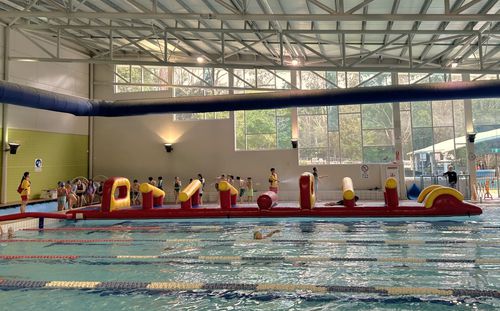 The community is invited to dive into fun at the Y KFAC Family Fun Day
Families are invited to get active, connect with their community, and enjoy an afternoon of entertainment at the Y Ku-ring-gai Fitness and Aquatic Centre (KFAC) Family Fun Day on Sunday, October 11, from 1pm to 5pm.
Read the post Why Movement, Friendship and Fun Matter More Than Ever
World Mental Health Day on 10 October reminds us that physical activity, social connection and fun can support mental wellbeing. Swimming, gymnastics, fitness and team sports help build confidence, reduce stress and create meaningful connections for children and adults.
Read the post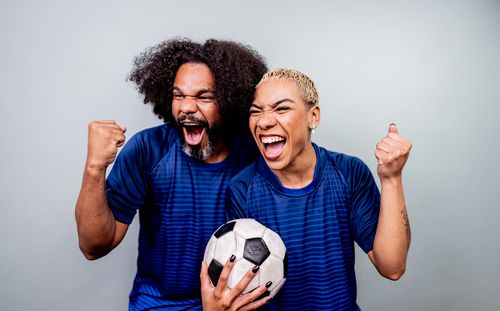 Game On: Futsal Registrations Open
Futsal Registrations are now open for the 2026 sporting comps with the Y NSW. Register your futsal team and play at either the Y Ryde or Bennelong Sporting Centres.
Read the postUpdate your browser to view this website correctly. Update my browser now